Advertisers often ask how a Connexity campaign unlocks incremental demand on top of the existing direct in-house campaign that the advertiser runs.
As a starting point, the Google auction prevent self-competition as an enshrined core principle:
“A merchant will never be second-priced against itself in the auction for any offer, irrespective of the number, or identity, of the comparison shopping services used by the merchant.”
That means, however many comparison shopping service partners you work with, Google treats each campaign as coming from the same retailer and does not allow the individual campaigns to compete with one another.
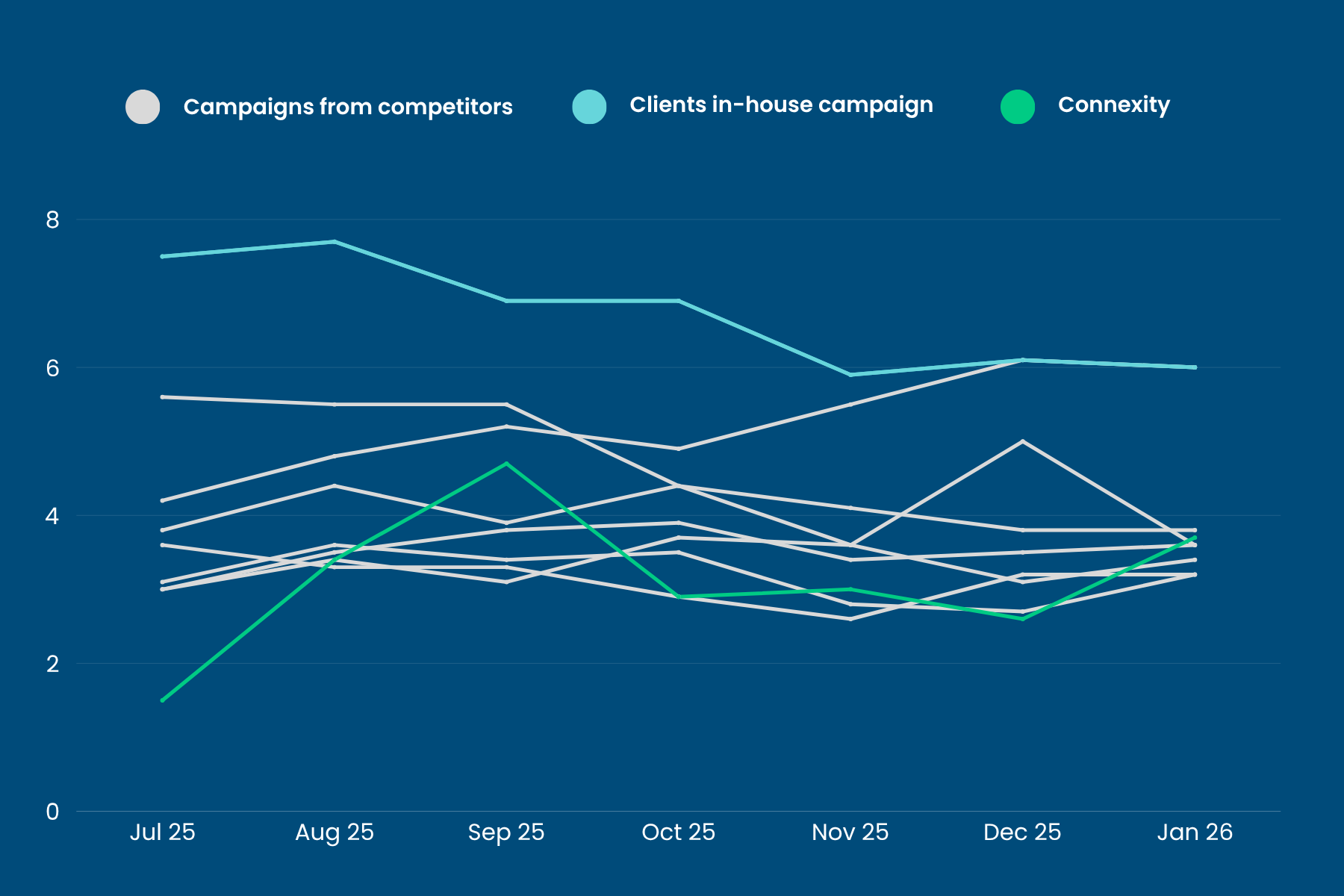
The auction insight report (AIR report) can show this action across its three core metrics.
The first is impression share. This indicates the share of impressions you are eligible to win for the products that you have in your feed, against other eligible advertisers who also have relevant products for that query. For example, if you’re a retailer selling Nike trainers, your Auction Insights report will show all competitors bidding on the same terms — including Nike’s own ads, other retailers stocking Nike products, and resale platforms like eBay or Vinted selling second-hand pairs. On popular brand queries such as this, we expect to see 40 or 50 different competitors bidding to win an impression.
The second key metric is overlap rate, which determines how often your campaign appears versus any other competitor in the auction. A 50% overlap with a given retailer means in half of the impressions your ad is alongside that particular competitor.
The last metric to highlight in the auction insight report is outrank share, which determines ad position. It doesn’t show an exact number but what share you are above a given competitor as a proportion of total impressions. Say your rank is 10% against a specific competitor, then in those auctions in one out of every ten impressions you appear ahead of that competitor. So overall that competitor is much stronger than you in this auction. The higher the outrank, the higher your ad position is against your selected competitors.
The report plays a key role in the work of our analyst teams. Beyond impression share, by continuously monitoring overlap and outrank share we can provide transparency to each advertiser, around ad position and benchmarking positive delivery on goals against given competitors.
So what does this mean for your CSS relationships?
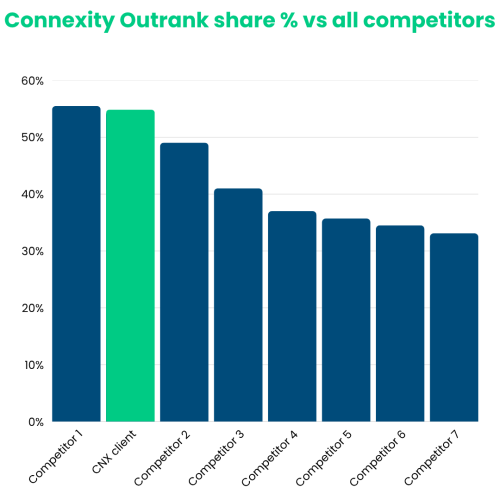
We strongly believe the auction insight report provides true transparency as to where the CSS is operating in the auction landscape and provides a discussion document as to whether the campaign is at the desired level or operating under or over where the direct advertiser feels they are adding value.
If the outrank share is very high then that indicates that the target maybe is too low and efficiency needs to be tightened. Conversely if the overlap or impression share is lower, then indicates that the buying power of the CSS is too low and more room in the performance goals can help drive greater impact.
The auction insight report provides a holistic view of the entire auction, rather than individual CSS performance in isolation. It’s one of the best methods to understand the benchmarks of success and support decisions needed in order for a CSS to be a trusted part of the in-house team.